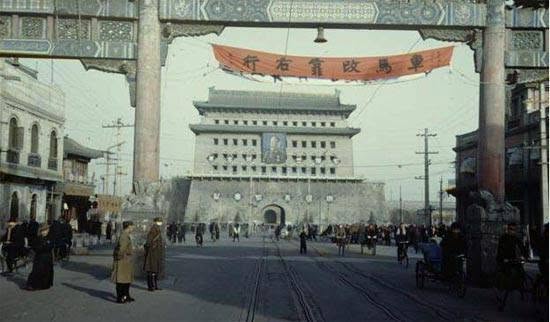
Most are familiar with the portrait of Mao Zedong, the founder of communist China, hanging over the entrance of Tiananmen, the Gate of Heavenly Peace, in Beijing. It was not always like that. From October 1945, to mark the recent defeat of Japan, the image of Chiang Kai-shek, the then-ruler of Nationalist China, was put in the same place. Only in early 1949, as Chiang was losing the civil war to Mao and preparing to relocate to Taiwan, was it taken down again. Today it is nearly forgotten that the center of the old imperial capital once looked very different.
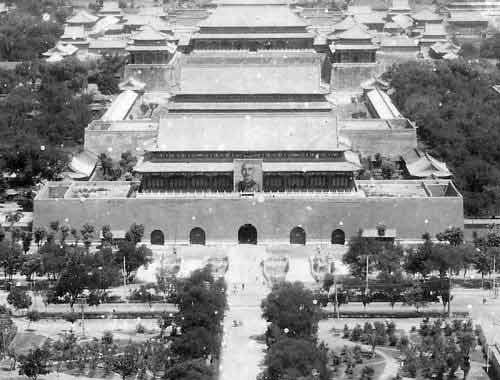
Chiang Kai-shek was actually not the first. The tradition started with Sun Yat-sen, the “Father of Modern China.” His portrait was first hung on the gate in 1925 to mourn his death, and hung up again in 1928 when the Nationalists first unified the country. Sun Yat-sen’s portrait actually still returns to the center of Tiananmen Square every May Day and National Day.
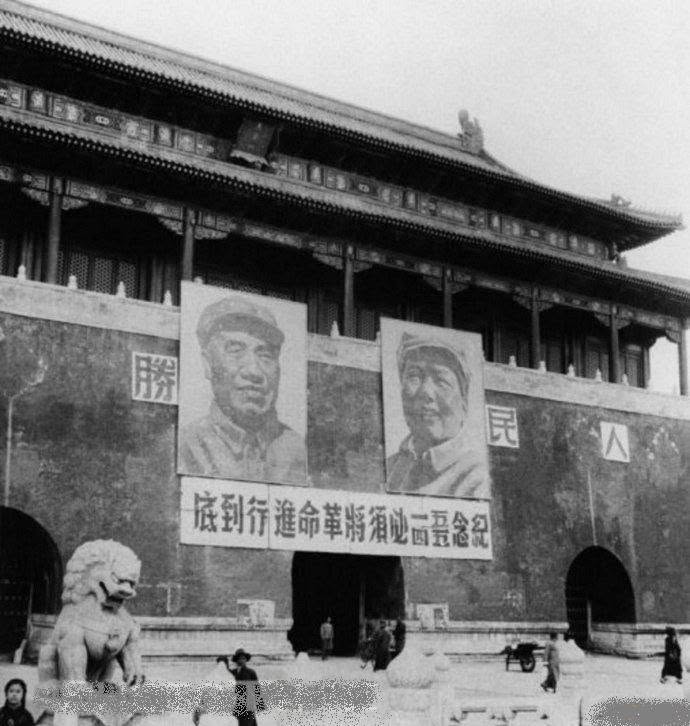
Mao’s portrait wasn’t always the static, forward-facing, airbrushed icon we see today. The first portrait hung in 1949 featured Mao with a worker’s cap, slightly tilted, looking off into the distance. Over the early decades of the People’s Republic of China, at least nine different versions of Mao’s portrait were used, including versions where he looked slightly to the side or wore different clothing, before the current version was standardized during the Cultural Revolution.
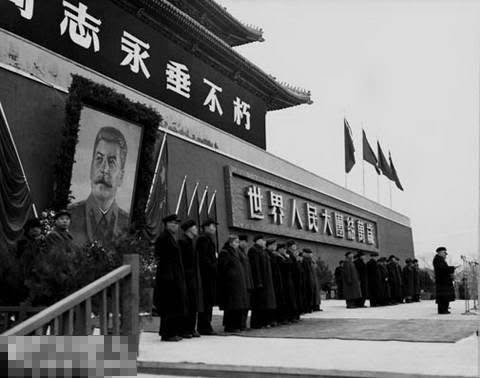
In a historical anomaly nearly forgotten today, Mao’s portrait was taken down for just a single day on March 9, 1953. It was replaced with a massive portrait of Joseph Stalin to mark the Soviet leader’s official mourning ceremony, complete with a massive black-and-white memorial wreath. Shortly thereafter, the geopolitical amity between Moscow and Beijing soured into the Sino-Soviet split, burying this bizarre moment in history.