


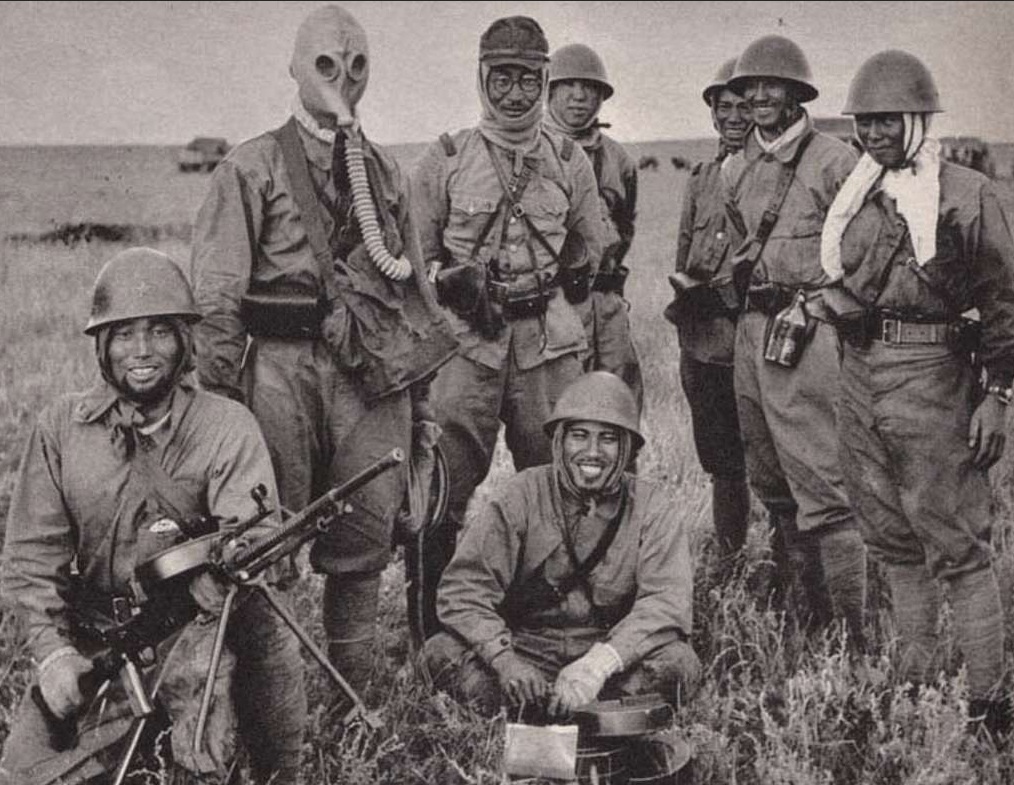
If you picture the Japanese soldiers who fought in China and across the beaches of the Pacific, it is easy to imagine them as physically identical to modern Japanese people. In broad terms that is true. But recent research suggests the story is a little more nuanced and a lot more interesting.
A 2026 study using 3D CT scans and geometric morphometrics compared skulls from individuals born in the late 19th and early 20th century with those of people who died in the 2020s (Usui et al., American Journal of Biological Anthropology) . By mapping hundreds of anatomical points on each cranium, the researchers were able to detect subtle but consistent differences in shape across time.
The earlier generation, which includes those who would later serve in the wars of the 1930s and 1940s, tended to have slightly longer skulls from front to back. Modern Japanese crania, by contrast, are on average broader and somewhat shorter, a pattern anthropologists refer to as brachycephalization. There are also modest shifts in features such as the mastoid process behind the ear and aspects of facial projection. None of these differences are dramatic on their own, but taken together they show a clear population level trend.
What this means is not that wartime Japanese soldiers would look unfamiliar to us. There is a great deal of overlap, and individual variation is large. A photograph from 1942 would not suddenly seem alien. Yet statistically speaking, those men came from a population whose cranial morphology was not quite the same as that of present day Japan.
The likely explanation lies in the sweeping changes of the 20th century. Improvements in nutrition, healthcare, and living conditions have altered human bodies across the world. Height increased, proportions shifted, and even the skull quietly changed shape. The bones of the head, often assumed to be fixed, have in fact recorded a century of social and biological transformation.


