• |

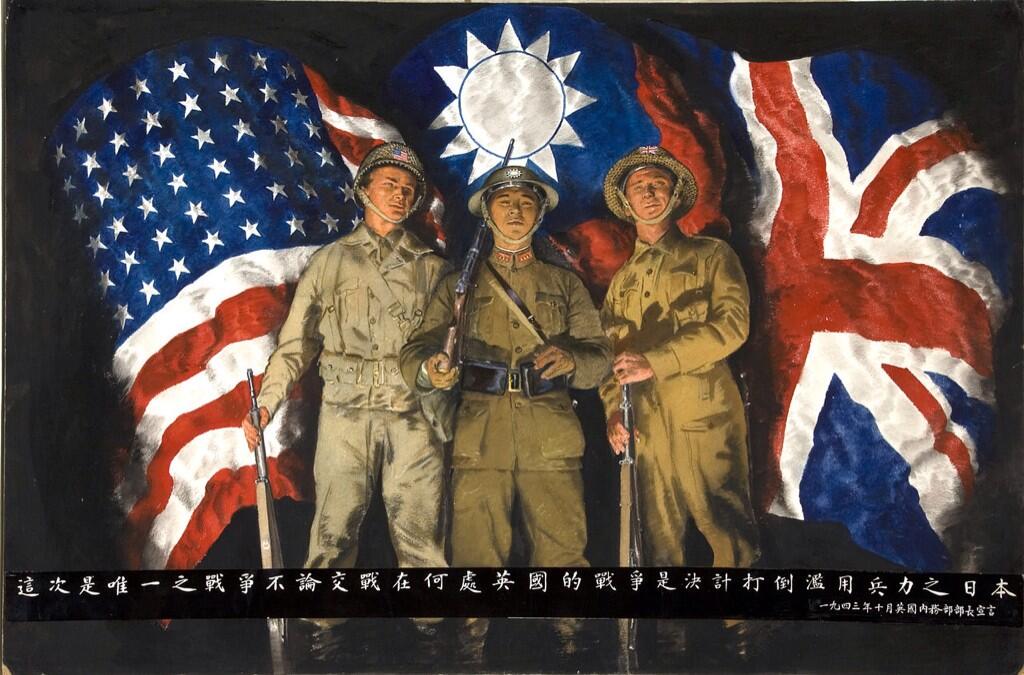
    ‘It’s All One War’

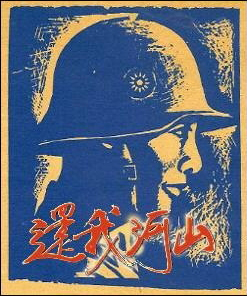
    The poster above is of British origin, and with the Chinese soldier placed at the center it is clearly meant to signal that the United Kingdom considers the Chinese contribution to the Allied war effort of key importance. This is underlined by the Chinese text, which roughly translates as follows: “This is the only war we…

  • Japan’s Skull Squadron (I)

    One of the oddest but also most feared Japanese units on the Asian mainland in the years prior to full-scale war with China was the so-called Skull Squadron. Read on in this article first carried on the Warfare Historian Blog:   The Second Sino-Japanese Conflict of 1931-1945 saw thousands of different regiments, divisions, units, and armies,…

  • Shattering the Myth

    On April 7, 1938, the city of Hankou in central China “turned into a bedlam as thousands of firecrackers were exploded and newsboys tore about the streets shouting at the top of their lungs the news of the ‘annihiliation of a Japanese column at Taierzhuang’.” The scenes, described by the North China Herald, were surely…

  • |

    Wolf Boy: Japan’s Psy-Ops Against China

    Japan’s psychological warfare program in World War II was remarkably diverse, and targeted not just the western Allies, but also the Chinese, as the examples below demonstrate. They are from the extremely comprehensive website Psywarrior. The explanations accompanying the illustrations are written by Herb Friedman, who quotes a 1948 publication on physchological warfare issued by the…

  • |

    Radio Free China

    This article on how a sleepy California beach town was at the center of a war across the Pacific is excerpted from Boom, a Journal of California. For the full story, click here The newsmen ignored the Japanese bombs shaking seventy-five feet of rock above their heads. It was June 1940, and a team of…

  • |

    An Unlikely Encounter

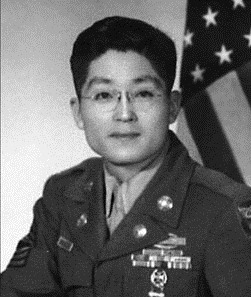
    Shanghai, 1945: Roy Matsumoto, a 32-year-old linguist in the US Army, is on a mission to interrogate Japanese prisoners of the war that has just ended. Defying the laws of probability, he spots his own cousin among the captives. The cousin has news. In an even unlikelier turn of events, Matsumoto’s own brother is also a…

  • |

    The Camera as a Weapon

    When the Japanese army marched into the Chinese capital Nanjing in December 1937, only a small number of foreign residents had stayed behind. One of them was John Gillespie Magee, an American citizen and a minister at an Episcopal mission. In the terrible days that followed, he used his 16mm camera to record the atrocities committed by…