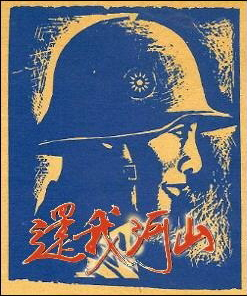
The Tragically Complex Life of General Tang Pao-huang
- By Peter Harmsen
- 26 June, 2026
- No Comments

Behind every great literary epic, there are real, deeply human ghosts. For the internationally acclaimed Eurasian author and physician Han Suyin, that ghost was her first husband: General Tang Pao-huang.
To history, Tang is remembered as a staunchly patriotic, deeply conservative military officer who fought on the losing side of China’s brutal mid-century transformations. But to readers of twentieth-century literature, his legacy is far more complex. He is the tragic, oppressive antagonist of Han Suyin’s raw, revealing memoirs—a man trapped by the rigid traditions of a bygone era while the world erupted into chaos around him.
Tang’s story intertwined with the literary world in 1938. As the Second Sino-Japanese War broke out, a passenger ship cut through the waters from Europe back to China. On board was Rosalie Chou (who had not yet taken her famous pen name), a brilliant medical student returning home to aid her country. Also on board was Tang, a handsome, fiercely ambitious Nationalist (Kuomintang/KMT) military officer aligned with Chiang Kai-shek.
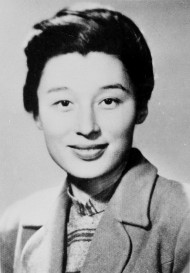
Bound by a shared sense of patriotic duty, they fell in love and married in Wuhan in 1938, just days before the city fell to Japanese forces. Together, they fled inland with the Nationalist government to the wartime capital of Chongqing. In 1940, they adopted a daughter, Tang Yungmei.
While the skies over Chongqing rained Japanese bombs, an entirely different battle was raging inside Tang and Rosalie’s home. Tang was a product of old-world Chinese patriarchy. He expected a submissive, domestic wife who would remain safely hidden away. He fiercely opposed her dreams of becoming a doctor and tried to force her into the mold of a traditional military spouse. Han Suyin later described this suffocating existence as living in a “gilded cage.”
Despite Tang’s escalating resentment, Rosalie defied him. She worked covertly as a midwife in a missionary hospital and channeled her marital isolation into a manuscript. Her debut novel, Destination Chungking (1942), was published to international acclaim. It is said that an infuriated Tang, feeling his domestic authority threatened by her sudden public success, beat her savagely upon its release.
In 1942, Tang was posted to London as a military attaché. Rosalie eventually joined him in 1944, but she used the relocation to orchestrate her escape. She enrolled at the Royal Free Hospital School of Medicine, effectively ending their intimacy.
When the Chinese Civil War reached a fever pitch, Tang returned home to command Nationalist forces on the front lines. The separation became permanent in 1947, when Tang was killed in action while fighting Communist forces in Northeast China.
Tang Pao-huang died defending a dying regime, never living to see his estranged wife become one of Asia’s most prominent global voices. Han Suyin laid bare the agonizing realities of their marriage in her poignant 1968 memoir, Birdless Summer.
Tang’s life remains a fascinating case study of the mid-century Chinese elite: a man driven by fierce nationalism, yet fatally bound to an unyielding cultural conservatism that alienated the person he loved most.


 Copyright © 2026
Leave a Reply