The Good Ship Wharton: When Swarthmore College Trained the Chinese Navy
- By Peter Harmsen
- 5 June, 2026
- No Comments

In the autumn of 1943, the quiet, Quaker-hewn campus of Swarthmore College became an unexpected frontline for international military diplomacy. World War II was raging across two oceans, and the United States was deeply invested in strengthening its alliance with the Republic of China. To prepare for the postwar reconstruction of China’s maritime defenses, the U.S. government sponsored an elite group of forty-nine Chinese naval officers for an intensive training program on American soil. Swarthmore was chosen as their first crucial port of call.
The officers, most of whom were young graduates of the Chinese Naval Academy, arrived on campus in October 1943. Their primary mission at Swarthmore was masterclass English language acquisition and cultural immersion, essential prerequisites before they could move on to advanced technical training. The college assigned them quarters in Wharton Hall, a stone dormitory that the officers affectionately dubbed the “good ship Wharton.”
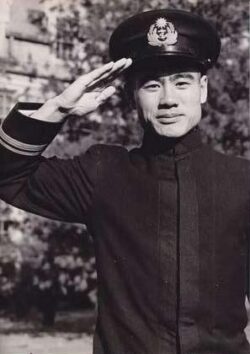
For several months, the campus buzzed with a unique cross-cultural energy. The officers plunged into rigorous daily language classes taught by Swarthmore faculty, designed to give them the vocabulary needed for complex naval operations. Yet, their presence extended far beyond the classroom. Despite Swarthmore’s deep-rooted Quaker pacifist traditions, the campus community embraced the visitors. The officers joined student discussions, attended local social gatherings, and integrated into the fabric of campus life. This integration even sparked lifelong personal bonds; famously, one of the Chinese officers later married a Swarthmore faculty member.
By the spring of 1944, the intensive program culminated in a historic ceremony. At Swarthmore’s 1944 commencement, the forty-nine officers were awarded official certificates of English training completion. The event drew massive attention, attended by high-ranking dignitaries including Wei Tao-ming, the Chinese Ambassador to the United States, and Admiral Liu of the Chinese Navy.
Following their graduation from Swarthmore, the contingent split to fulfill their specialized military tracks. Approximately half of the officers departed for the Massachusetts Institute of Technology (MIT) to study the technical complexities of shipbuilding and marine engineering. The remaining half matriculated at the United States Naval Academy in Annapolis, focusing on naval administration and command tactics.
Though their time in Pennsylvania was brief, the Chinese naval officers left a permanent physical and historical footprint on the campus. To commemorate their bond with the college, a new stone staircase and an outdoor water fountain were constructed adjacent to Wharton Hall. Guarding the site is a traditional Chinese stone lion. Next to it, a weathered copper plaque preserves the legacy of this wartime alliance, with the names of all forty-nine officers permanently engraved in elegant Chinese calligraphy. Today, the monument stands as a quiet reminder of a winter when a small liberal arts college played a global role in shaping the future leaders of the Chinese seas.


 Copyright © 2026
Leave a Reply